Exhibitions

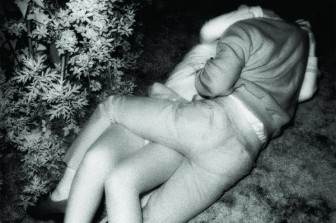
"Rona Yefman and Tanja Schlander: Never Violence"

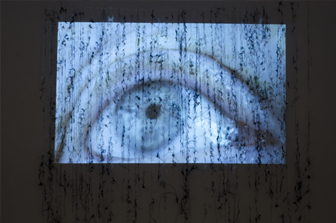
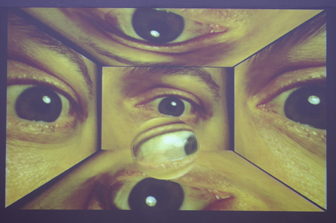
Multidisciplinary artist Rona Yefman often engages with issues of gender and feminine representation. Her art includes long-term collaborations with radical personalities who dictate the absurd and iconic images of our time. She is particularly interested in photography. According to Yefman, the camera allows things to happen.

Saturday, 21.12.19, 20:00
Saturday, 01.08.20
More info: 04-6030800

"Sharon Lockhart: Goshogaoka "

Artist Sharon Lockhart is a photographer and film director, known for the long-term projects she creates based on in-depth research, often in cooperation with communities. Her films are meticulously planned, characterized by freeze-frame shots or minimal camera movements. They present people, places, and events related to daily routine.

Saturday, 21.12.19, 20:00
Saturday, 01.08.20
More info: 04-6030800

"Iris Kensmil: The New Utopia Begins Here #2"

Iris Kensmil's exhibition is part of a project that represented the Netherlands in 2019 at the Venice Biennale. In many senses the Biennale is an important arena for defining the place of art in the context of ideas of citizenship and nationality. The installation Kensmil presented there, called The Measurement of Presence, was created in collaboration with Remy Jungerman.

Saturday, 21.12.19, 20:00
Saturday, 01.08.20
More info: 04-6030800

Origami Installation

Tomoko Fuse

What is origami? Most people would describe it as is an activity in which squares of colored paper are folded to create representations of animals, objects or geometric forms. However, this would not describe the folded paper installations of Tomoko Fuse (b. 1951). Her work asks us to consider the relationships between tradition and innovation. Is her work origami, or is it sculpture made from folded paper?

Saturday, 30.11.19, 20:00
Saturday, 18.04.20

Curator: Paul Jackson

More info: 04-6030800

"A Black Flag in a Red City"

Wadi Salib: 1948-2019

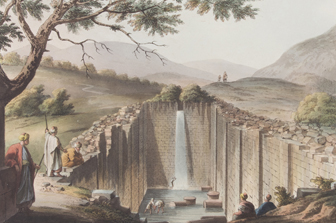
The exhibition A Black Flag in a Red City illuminates a chapter in the history of Haifa's Wadi Salib neighborhood, the social implications of which are absent from most of the urban and national "spaces of memory." The exhibition focuses on the voices of the residents of Wadi Salib in the second half of the twentieth century, reflecting a personal and collective memory of urban history written "from below." Using exclusively visual means, the exhibition presents experiences of marginality, injustice, and exclusion, alongside the development of a diverse and lively social fabric. This reality fostered processes of social organization and resistance, climaxing in the protests of July 1959.

Saturday, 23.11.19, 20:00
Sunday, 11.10.20


More info: 04-6030800

Oskar Tauber: photo-journalist

From "A Black Flag in a Red City"

In the 1950s, a number of professional photographers were active in Haifa. Some worked for local institutions and government bodies. Amiram Erev (the “Solel Boneh Photography Studio”) and Moshe Gross (the “Keren Or” studio), for example, documented the period’s bustling industries and massive surge of construction. Alongside Arav and Gross, photographers passing through the city — such as Boris Carmi and Zoltan Kruger — commemorated its unique views.

Saturday, 23.11.19, 20:00
Saturday, 02.05.20
More info: 04-6030800

In the Golem's Garden

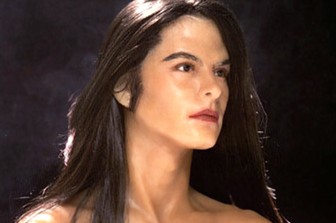
The story of the Golem – a staple of Jewish folklore – describes a being made of clay and brought to life using secret incantations. This act straddles the boundary between the godlike and the sinful, between wisdom and witchcraft. The legend about the man-made creature expresses a desire for power, control, and convenience. These desires continue to animate the heart of man to this day.

Saturday, 14.09.19, 20:00
Sunday, 14.06.20

Curators: Michal BenJakob and Dafna Falk


More info: 046030800

Humour and Satire in War Prints

During the Edo period, various laws and prohibitions were imposed on the Japanese public. The Tenpô Reforms of 1841 forbade luxury. In 1842, a special law was enacted dealing with woodblock prints and illustrated books. Among other things, the law forbade the publication of prints depicting Kabuki actors, courtesans, geisha and eroticism, and banned the production of colour prints with more than eight colours.

Saturday, 27.07.19, 19:30
Monday, 21.10.19
More info: 04-6030800

Winds of War Japanese Propaganda Prints of the First Sino-Japanese War and the Russo-Japanese War

In the mid-19th century, following a period of two hundred and fifty years of seclusion, Japan opened its gates to the West and trade relations with various countries were established. In addition, Japan formed a large army in order to protect its strategic interests in neighboring countries, as did many other world powers of the time.
At the end of the 19th century, Japan's territorial disputes with China on Korean soil increased and it sent troops to the region. In the early 20th century, Japan did so once again, in a similar conflict with Russia. During the Sino-Japanese War (1894-1895) and the Russo-Japanese War (1904-1905), the Japanese army fought on various fronts in Korea and in Manchuria, China.

Saturday, 27.07.19, 19:30
Saturday, 04.01.20
More info: 04-6030800

Tar and Milk

Local art, whether Israeli or Palestinian, has over the generations sharpened its gaze upon the homeland's scenery – a gaze traditionally burdened by concern and distress, on both the personal-existential and the historical-geopolitical level. However, the local artistic discourse surrounding this issue has scarcely considered its gender-oriented aspects. Neither the Israeli nor the Palestinian artistic discourse distinguishes between the masculine and the feminine gaze with regard to this charged subject. The present exhibition cluster seeks to address this complex and mostly neglected issue.

Thursday, 11.07.19, 20:00
Friday, 24.01.20
More info: 04-6030800