
Exhibitions
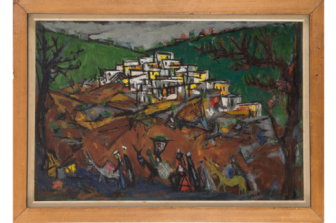
Facial Topography: Israeli Art from the Museum's Collection
New Exhibition
The permanent exhibition showcases masterpieces from the Haifa Museum of Art's collection, which encompasses over 8,000 works, charting major trends in the history of local art. It spans works from the late 19th century to the present, where face and topography are mutually reflected, indicating affinities between the furrows of plowed earth and furrowed faces, between sun-scorched soil and tanned skin, between cracked asphalt and wounded flesh.
Saturday, 02.01.27
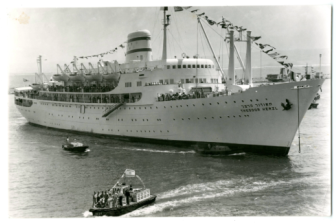
Blood - Money - Ships | The Reparations Agreement with Germany as a Catalyst for the Growth of the Israeli Merchant Fleet
Now at the Museum
The exhibition displays models of several ZIM shipping vessels, designed for various purposes. The first ship received under the agreement, Dagan, was used for cargo, as was the Ampa'al. The ships Israel and Zion were intended for mixed use of passengers and cargo, while Jerusalem served as a passenger ship. The ship Har Gilad, owned by El-Yam company, was used for general cargo and refrigerated transport. The exhibition also features historical moments in the ships' stories, documented in sources including news diaries, photographs, and promotional leaflets.
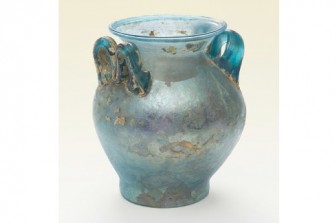
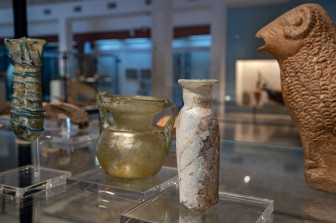
Glassware in Antiquity
The secret of glassmaking was already known in the ancient world: take sand that is rich in silica, quartz, and potassium salts, heat it gradually to 1100 Celsius, and you will get an almost liquid, mailable material. Once the liquid has cooled down and solidified, you will have lumps of raw glass that can be remelted and fashioned into vessels and jewelry.
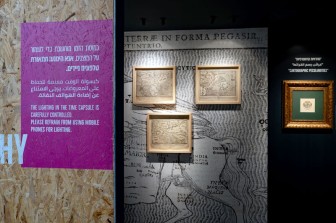
We’re on the Map! Cartography—The Art of Mapmaking
Cartography, the science of maps and mapping, is an ancient craft that may even predate the invention of writing. Already in antiquity, maps of cities and countries had been drawn up in various civilizations around the world, such as China, Mesopotamia, and Greece.
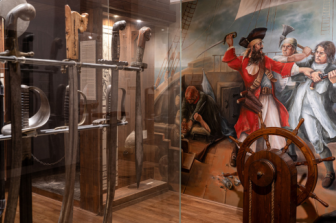
Pirates - Between truth and legend
The phenomenon of piracy - piracy - has evolved since man began trading in ships, and it has flourished mainly in areas of loose rule. Piracy existed in ancient times in the Mediterranean and the Sea of China and reached its peak in the seventeenth century in the Atlantic Ocean, with the rise of European colonialism and the development of trade routes with the "New World".
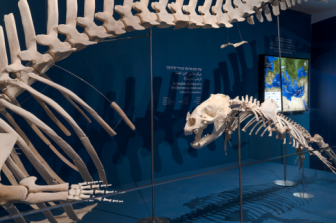
Mammals of the Deep | The Wonderful World of Marine Mammals in the Mediterranean and in the Gulf of Eilat
Now at the Museum
This exhibition is a product of this special bond between humans and nature. Specimens that indicate a highly diverse presence of marine mammals in our region have been brought to the museum for the very first time. Marine mammals of the Mediterranean and of the Gulf of Eilat, which is, in fact, an extension of the Indian Ocean, include various species of cetaceans (whales and dolphins) and one species of seal. The telltale findings that testify to their presence have been collected by a very special group of people, members of IMMRAC, who devote their time and energy to the task of studying the world of marine mammals and assisting in the protection of their habitat.
Saturday, 26.06.27
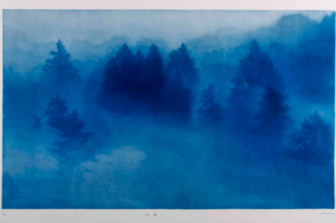
Here, There, and Nowhere
New exhibition
The exhibition Here, There, and Nowhere explores representations of landscape in works from the Haifa Museums' collections and invites viewers to move between the familiar, the Other, and the unknown. This exhibition showcases the dynamic visual language of printmaking, its various techniques, and how this medium is used to interpret and examine space.
Thursday, 31.12.26
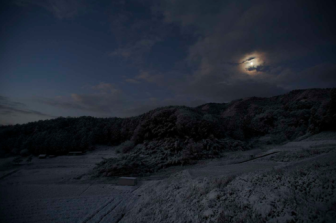
In Praise of Shadows | Silence in the Time of Light
New exhibition
The exhibition In Praise of Shadows seeks to observe shadow not as an absence of light, but as a place where memory, mystery, and imagination exist; a place where things are not fully revealed. It unfolds as a movement between tradition and modernity, between classical Japanese printmaking and contemporary printmaking and photography, and current paper, ink, and ceramic works. But most of all, it seeks to trace one elusive quality – the way in which shadow gives the world aesthetic, emotional, and spiritual depth.
Saturday, 28.11.26
The Fish Mound
“Shikmona” | Tell es-Samak
The Fish Mound (Tell HaDagim), located at the shore in Haifa, is an extraordinary time capsule. Findings from the site open a window into Haifa's ancient past, when, like today, it was a center of trade and industry.
SOS!
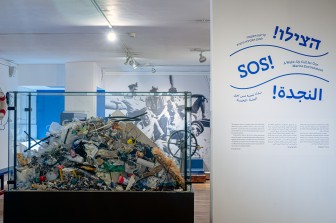
This exhibit urges all of us to raise awareness of the rapid ecological destruction taking place in our marine environment. It invites us to join thousands of activists in Israel and worldwide in participating in both small- and large-scale actions in support of the ocean’s ecological health.